What to Use Instead of Sugar?

I’ve mentioned natural and artificial sweeteners in my previous posts. Let’s talk about these. First of all, how are they different from regular old sugar? White sugar goes through extensive processing. And white sugar causes our blood sugar and insulin levels to rise quickly to a high level, which is at the root of sugar’s health concerns. So, it stands to reason that an acceptable sugar alternative should be natural and allow for our blood sugar to rise more slowly and evenly, or not at all. Unfortunately, it’s hard to find these qualities in one perfect product!

Natural Sweeteners

The most natural sweeteners occur naturally in fruits, vegetables, and herbs. They do slightly raise blood sugar and insulin levels, but it’s not a sharp increase. What if you want to add this sweetness to other foods? Here are a few common natural sweeteners:

  • Stevia is an herb. In it’s most natural plant form it can be used dried or as an extract. The stevia powders available in the store are processed and not completely natural. Pros and cons? Stevia does not raise blood sugar and insulin levels. Stevia does have a bit of ‘aftertaste’ that takes getting used to.
  • Raw Honey is another natural choice. It contains very small amounts of nutrients (vitamins, minerals, antioxidants). It does raise blood sugar.
  • Raw Maple Syrup also contains some nutrients and it has a somewhat more balanced effect on blood sugar.
  • Agave Nectars that are commercially available are often processed. Agave nectar doesn’t cause blood sugar to rise quickly, but it is very high in fructose.
  • Raw Sugar Cane Juice is the least processed form of regular old sugar.

sweeteners

Artificial Sweeteners

Artificial sweeteners are not natural. But they have no effect on blood sugar or insulin levels. Common artificial sweeteners are:

  • Sucralose – commercially available as Splenda. Sucralose is processed from regular old sugar. Sucralose works well for baking and cooking.
  • Aspartame – Nutrasweet and Equal. Aspartame is the most widely used sweetener in North America and is most commonly used in soda. It’s safety has been debated through the years.
  • Saccharin – Sweet’n Low and Twin. Saccharin is the oldest artificial sweetener and also carries with it a history of debate regarding safety concerns.
  • Sugar alcohols – sorbitol, mannitol, xylitol, and hydrogenated starch hydrolysates. Watch out for the laxative effects of these sweeteners!

As a rule, I use sweeteners only when necessary. I try to reduce or limit the amounts of sweeteners I use. I use them as part of a healthy and varied diet. Ultimately, the goal is to reduce or eliminate sugar and sweeteners altogether, but this is real life, right?

Have you found other sweeteners that are not mentioned here? I’d love to hear about them. Leave me a comment!

Michelle

Recipe: Chocolate Chip Cookies!

As I awoke this morning to the sound of my daughter’s insulin pump low cartridge alarm going off down the hall in her bedroom while she slept, I got to thinking about low-carb snacking. Yes, I’m a much more relaxed diabetes mom these days. A couple of years ago, I would have flown downstairs in a panic, gathering pump supplies and insulin, waking everyone in the household in the process, terrified of high blood sugar. I’m a little calmer now. But I’m getting off-topic. Back to low-carbohydrate snacks. She is staying up late now that summer holidays are here and snacking late into the night on high-carb junk food. I need to make sure that there are some delicious lower-carb alternatives in the kitchen. And let’s be real. Teenagers aren’t going to choose carrots and celery to snack on late at night.

Years ago, I baked. A lot. After the diabetes diagnosis I didn’t bake so much. But I have been experimenting with Splenda in my baking to lower the sugar content and thus the total amount of carbohydrate, which is important for people managing diabetes. Splenda is an artificial sweetener. There are pros and cons to consuming artificial sweeteners. That’s a whole other topic. However, for our purposes here,  Splenda is my preferred choice for low-sugar baking when necessary.

Today I am going to share with you my original, full-sugar chocolate chip cookie recipe, along with my Splenda, reduced-sugar recipe. My original recipe contains a cup of sugar plus a cup of chocolate chips and makes 26 cookies. My Splenda recipe makes 22 cookies with half a cup plus 2 tablespoons of sugar and half a cup of chocolate chips. I challenge you to make both and see what you think. I’m not going to try to convince you that they taste exactly the same. They are different. But I think you’ll be surprised. I’m also not going to pretend that I always make the lower-sugar recipe at my house. Sometimes I ‘live on the wild side’ and make the original recipe. Life is all about balance, right?

My Original Chocolate Chip Cookie Recipe

Preheat oven to 375 degrees Farenheit (or 350 convection).

Ingredients:

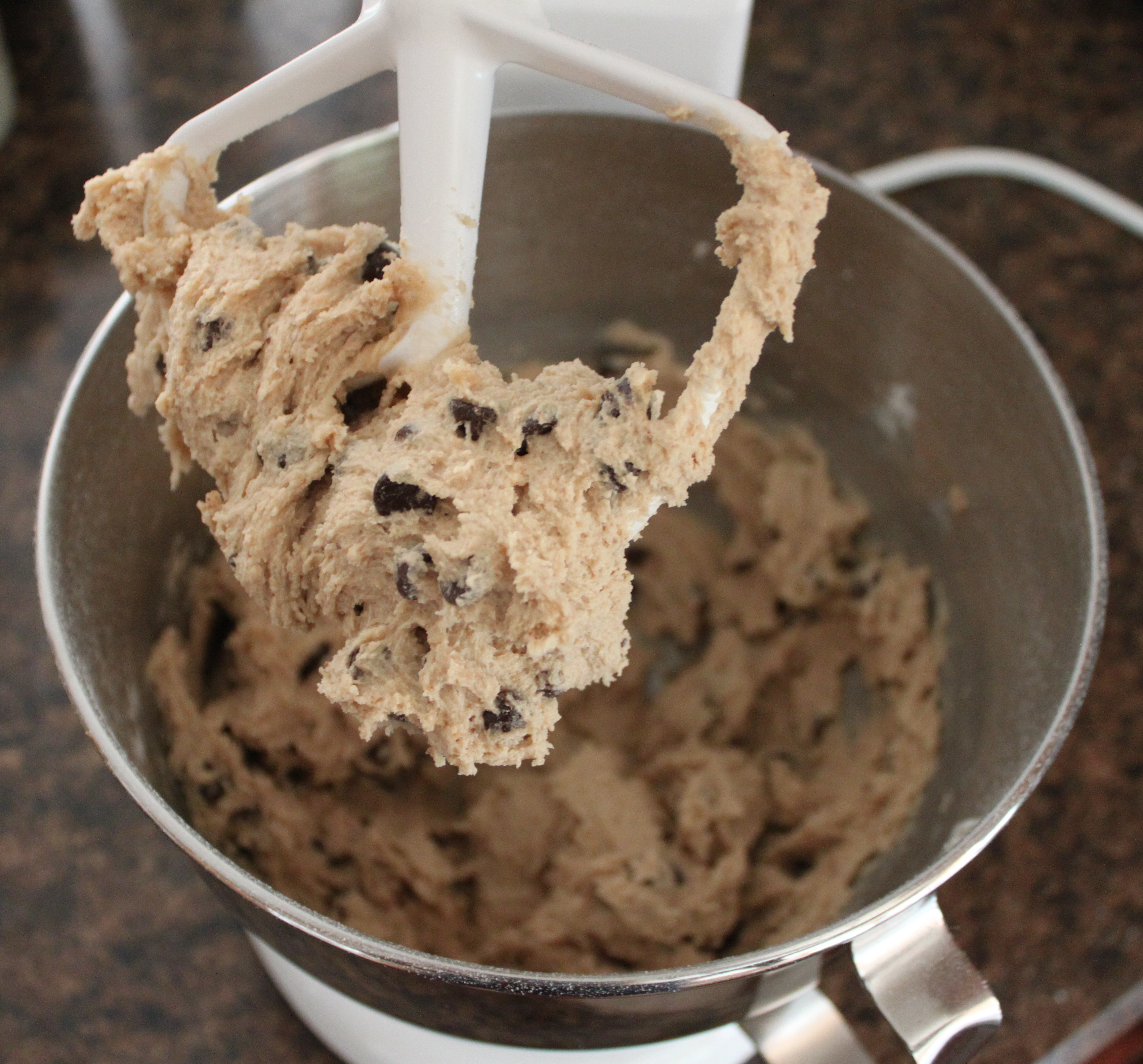
  • 1/2 cup sugarIMG_7911
  • 1/2 cup brown sugar
  • 2/3 cup unsalted butter (or margarine), softened
  • 1 egg
  • 1 tsp vanilla
  • 1 1/2 cups flour
  • 1/2 tsp baking soda
  • 1/4 tsp salt
  • 1 cup semi-sweet chocolate chips

Beat butter, sugars, vanilla, and egg. Stir in dry ingredients. Drop by spoonfuls onto cookie sheep. Bake 10 minutes.

*Total amount of carbohydrate in recipe: 468 grams.  Makes 26 cookies.  Carbs per cookie: 18.

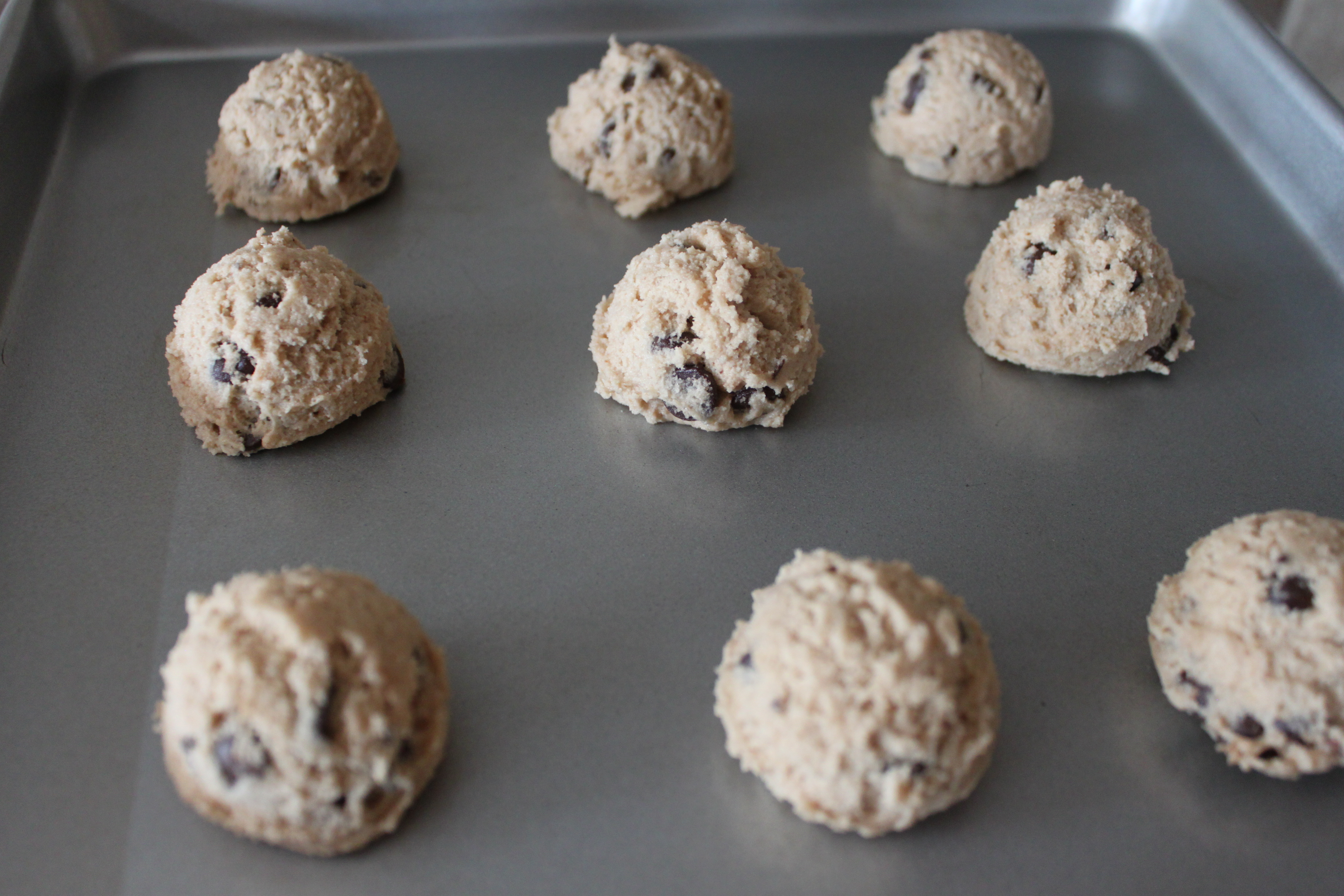
IMG_7915

 My Splenda Reduced-Sugar Chocolate Chip Cookie Recipe

Preheat oven to 375 degrees Farenheit (or 350 convection).

Ingredients:

  • 1/4 cup sugar
  • 1/4 cup Splenda
  • 2 tbsp Splenda Brown Sugar Blend (contains real brown sugar)
  • 2/3 cup unsalted butter (or margarine), softened
  • 1 egg
  • 1 tsp vanilla
  • 1 1/2 cups flour
  • 1/2 tsp baking soda
  • 1/4 tsp salt
  • 1/2 cup chocolate chips

Beat butter, sugar, Splenda, vanilla, and egg. Stir in dry ingredients. Drop by spoonfuls onto cookie sheep. Flatten slightly with the back of a spoon. Bake 10 minutes.

*Total amount of carbohydrate in recipe: 255.  Makes 22 cookies.  Carbs per cookie: 11.

IMG_7920

* All of my recipes include carbohydrate amounts. My daughter manages her Type 1 Diabetes with an insulin pump and carb counting. I hope this is helpful to you if you count carbs too.

Michelle

Better Drinking

Goal #1? Drink better!

I’m concerned about the amount of sugar that I consume and I’m pretty certain that a lot of it is in the things I drink. So I did a quick internet search to find out how many teaspoons of sugar we are consuming in the common things that I and my family drink regularly. I knew it would be high, but I was a little shocked at some of these. I made every attempt to find accurate sugar information on these drinks, but please keep in mind that this information is from various online sources.

  • My favourite coffee: a grande Starbucks Caramel Macchiato – 6.5 tsps of sugar!
  • My husband prefers a grande Latte at Starbucks – 3.5 tsps.
  • I also enjoy a Tim Horton’s French Vanilla Cappuccino every now and then. The small size – 6 tsps.
  • The small frozen lemonade at Tim’s – 5 tsps.
  • Smoothies should be better, right? A Tim Horton’s medium strawberry banana smoothie with yogurt – 10 tsps.
  • A McDonald’s medium strawberry banana smoothie with yogurt –  12 tsps.
  • A Mcd’s medium chocolate shake – 22 tsps of sugar!
  • What about a can of pepsi or coke? – depending on the info source, 8 – 10 tsps.
  • 12 ounces of apple juice, a staple in every kids’ diet – 10 tsps.
  • 1 cup of chocolate milk – 6 tsps.
  • I enjoy vitamin water. That’s healthy, right? 1 bottle of vitamin water – 6.5 tsps.
  • And, my son’s recent favourite pop? A 20 oz bottle of Mountain Dew – 15 tsps of sugar. I had no idea!

images

Just in case these shocking numbers alone are not enough to make me want to change my drinking habits, here are some real reasons to do so:

  • Sugar contains no essential nutrients.
  • Sugar is bad for our teeth.
  • Too much sugar can cause insulin resistance which can lead to Type II Diabetes.
  • Sugar might lead to obesity.
  • Sugar might lead to diseases such as cancer, heart disease, and stroke.
  • Sugar might lower immunity.
  • Sugar might cause inflammation in the body.
  • Sugar might cause skin aging, or skin problems such as acne.

Take a look at these articles:

How Toxic is Sugar? CBC News
What Does Cancer Eat? Sugar Mostly…  National Post
 7 Surprising Reasons to Give Up Sugar  ABC News

Okay, I’ll stop now! I am going to do a little more reading about sugar and I’ll share my findings in future blog posts. But for now, here is what I plan to do:

  1. I will gradually reduce the amount of sugar I put in my morning coffee until I can get away with only a bit, or maybe even none.
  2. I will drink more tea throughout the day, both hot and cold. This is a great excuse to experiment with homemade iced tea!
  3. I’ll drink more water and to make it appetizing I will infuse fruit in my water. I recently saw a very cool water bottle with a built in infuser compartment. Will have to go shopping!
  4. I will make fruit smoothies at home with no sugar.

Let’s talk about sugar. What are your thoughts?

Michelle