Doing the Research: Some Good Articles on Sugar Substitutes

I am always on the lookout for news about health and healthy eating. I’ve been reading a lot lately about artificial and natural sweeteners. I tweet links to good articles pretty regularly so be sure to follow me on Twitter if you’re interested – @eatlivebetter.

Here’s a rundown of some of the interesting articles I have come across lately:

What’s Healthier Between Sugar, Substitutes and High-Fructose Corn Syrup? at Huffingtonpost.ca. This article lists some sugar amounts in common drinks and foods. Did you know the average person eats about 30 teaspoons of sugar a day? The article goes on to talk about sugar substitutes, high fructose corn syrup, and artificial sweeteners. Overall, the news is not positive. There is no ‘good’ sweetener. Moderation is key.

Are These New Natural Sweeteners Good for You? at Self.com. This article discusses the safety of natural sweeteners such as stevia and agave. It also talks about the possibility that they may help with weight loss. It does advocate that sugar substitutes are better for us than sugar in order to control the health issues that come with sugar.

Artificially Sweet: Your Guide to 6 FDA-Approved Sugar Substitutes at wallstcheatsheet.com. This article explains the differences between stevia, aspartame, sucralose, neotame, acesulfame potassium, and saccharin.

Are sugar alternatives really a healthier option? at www.scmp.com (South China Morning Post) This article gives a good, concise summary of the pros and cons of green leaf stevia powder, xylitol, fruit sugars (like date and coconut),  honey, and maple syrup.

There’s lots of good information here. Have you come across any other good articles?

Michelle

Recipe: Mango Pineapple Smoothie

My favourite smoothie at McDonald’s is the mango pineapple smoothie. The ingredients are listed as ice and mango pineapple fruit base. Upon further searching, I found the ingredients to the mango pineapple fruit base, on the McDonald’s website:

Water, Clarified Demineralized Pineapple Juice Concentrate, Mango Puree Concentrate, Pineapple Juice Concentrate, Orange Juice Concentrate, Pineapple Puree (Pineapple and Ascorbic Acid), Apple Juice Concentrate, Contains Less than 1%: Cellulose Powder, Natural (Plant Source) and Artificial Flavors, Xanthan Gum, Pectin, Citric Acid, Fruit and Vegetable Juice for Color, Turmeric Extract (Color).

I was expecting added sugar in the ingredients list, but found artificial flavours and colours! Plus, I’m not really sure how ‘juice concentrate’ compares to real fruit.

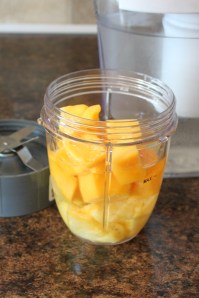
So… I think I will choose my Nutribullet mango pineapple smoothie instead. mango pineapple smoothie
Here’s the recipe:

  • fresh pineapple chunks
  • frozen mango chunks
  • cold water

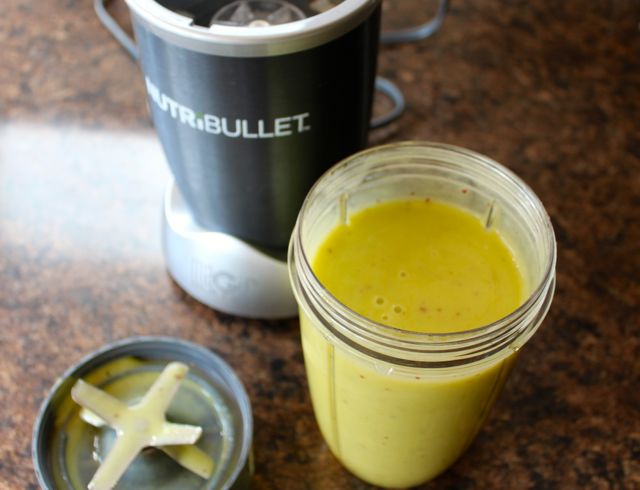
Place everything in the Nutribullet cup. Add the blade. Blend. It tastes the same and contains only pure and natural ingredients!

mango pineapple smoothie blended


Enjoy! Michelle


Recipe: Naturally Sweet Smoothie

Do you remember when I said yesterday that fruits, vegetables, and herbs contained natural sweeteners in a natural state? Well, a great way to harness that sweetness in a drink is by making a smoothie!

I love my NutriBullet and use it often. I don’t add sweeteners. Here’s my favourite recipe:

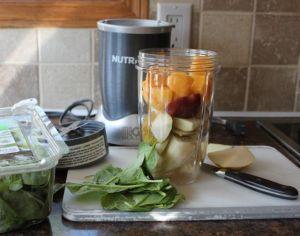
sweet fruit smoothie

  • 1 banana
  • 1 small pear
  • 1 small apple
  • 4-5 frozen mango chunks
  • handful of baby spinach leaves
  • cold water


Cut banana, apple, and pear into chunks. Place everything, peel and all, in the large Nutribullet cup. Add the blade and blend. Enjoy!

These sweet fruits make for a sweet smoothie. The spinach adds a veggie serving to your day. Plus, there is natural fibre in the leaves and peels.

finished smoothie


Michelle

What to Use Instead of Sugar?

I’ve mentioned natural and artificial sweeteners in my previous posts. Let’s talk about these. First of all, how are they different from regular old sugar? White sugar goes through extensive processing. And white sugar causes our blood sugar and insulin levels to rise quickly to a high level, which is at the root of sugar’s health concerns. So, it stands to reason that an acceptable sugar alternative should be natural and allow for our blood sugar to rise more slowly and evenly, or not at all. Unfortunately, it’s hard to find these qualities in one perfect product!

Natural Sweeteners

The most natural sweeteners occur naturally in fruits, vegetables, and herbs. They do slightly raise blood sugar and insulin levels, but it’s not a sharp increase. What if you want to add this sweetness to other foods? Here are a few common natural sweeteners:

  • Stevia is an herb. In it’s most natural plant form it can be used dried or as an extract. The stevia powders available in the store are processed and not completely natural. Pros and cons? Stevia does not raise blood sugar and insulin levels. Stevia does have a bit of ‘aftertaste’ that takes getting used to.
  • Raw Honey is another natural choice. It contains very small amounts of nutrients (vitamins, minerals, antioxidants). It does raise blood sugar.
  • Raw Maple Syrup also contains some nutrients and it has a somewhat more balanced effect on blood sugar.
  • Agave Nectars that are commercially available are often processed. Agave nectar doesn’t cause blood sugar to rise quickly, but it is very high in fructose.
  • Raw Sugar Cane Juice is the least processed form of regular old sugar.

sweeteners

Artificial Sweeteners

Artificial sweeteners are not natural. But they have no effect on blood sugar or insulin levels. Common artificial sweeteners are:

  • Sucralose – commercially available as Splenda. Sucralose is processed from regular old sugar. Sucralose works well for baking and cooking.
  • Aspartame – Nutrasweet and Equal. Aspartame is the most widely used sweetener in North America and is most commonly used in soda. It’s safety has been debated through the years.
  • Saccharin – Sweet’n Low and Twin. Saccharin is the oldest artificial sweetener and also carries with it a history of debate regarding safety concerns.
  • Sugar alcohols – sorbitol, mannitol, xylitol, and hydrogenated starch hydrolysates. Watch out for the laxative effects of these sweeteners!

As a rule, I use sweeteners only when necessary. I try to reduce or limit the amounts of sweeteners I use. I use them as part of a healthy and varied diet. Ultimately, the goal is to reduce or eliminate sugar and sweeteners altogether, but this is real life, right?

Have you found other sweeteners that are not mentioned here? I’d love to hear about them. Leave me a comment!

Michelle

Recipe: Chocolate Chip Cookies!

As I awoke this morning to the sound of my daughter’s insulin pump low cartridge alarm going off down the hall in her bedroom while she slept, I got to thinking about low-carb snacking. Yes, I’m a much more relaxed diabetes mom these days. A couple of years ago, I would have flown downstairs in a panic, gathering pump supplies and insulin, waking everyone in the household in the process, terrified of high blood sugar. I’m a little calmer now. But I’m getting off-topic. Back to low-carbohydrate snacks. She is staying up late now that summer holidays are here and snacking late into the night on high-carb junk food. I need to make sure that there are some delicious lower-carb alternatives in the kitchen. And let’s be real. Teenagers aren’t going to choose carrots and celery to snack on late at night.

Years ago, I baked. A lot. After the diabetes diagnosis I didn’t bake so much. But I have been experimenting with Splenda in my baking to lower the sugar content and thus the total amount of carbohydrate, which is important for people managing diabetes. Splenda is an artificial sweetener. There are pros and cons to consuming artificial sweeteners. That’s a whole other topic. However, for our purposes here,  Splenda is my preferred choice for low-sugar baking when necessary.

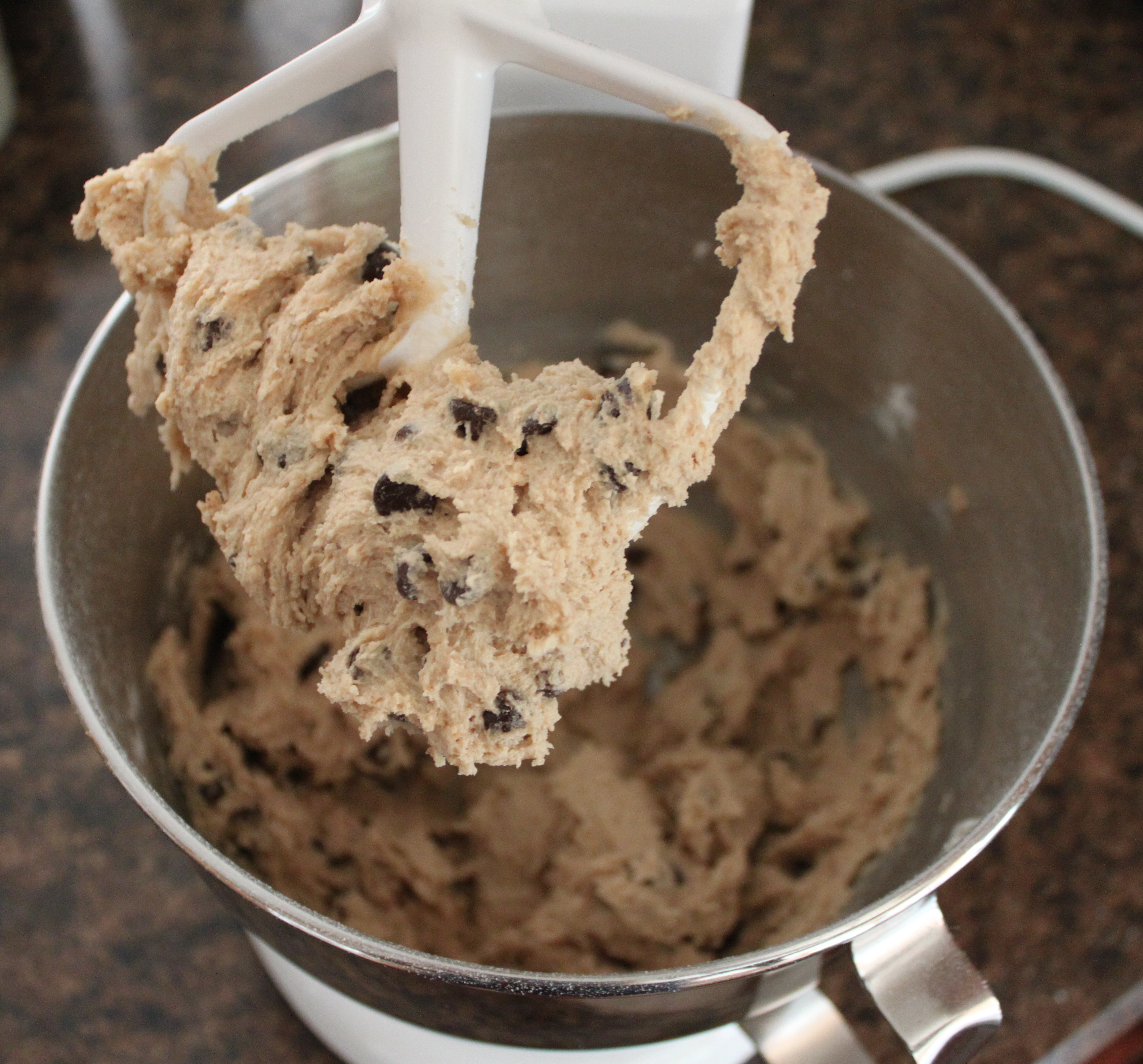
Today I am going to share with you my original, full-sugar chocolate chip cookie recipe, along with my Splenda, reduced-sugar recipe. My original recipe contains a cup of sugar plus a cup of chocolate chips and makes 26 cookies. My Splenda recipe makes 22 cookies with half a cup plus 2 tablespoons of sugar and half a cup of chocolate chips. I challenge you to make both and see what you think. I’m not going to try to convince you that they taste exactly the same. They are different. But I think you’ll be surprised. I’m also not going to pretend that I always make the lower-sugar recipe at my house. Sometimes I ‘live on the wild side’ and make the original recipe. Life is all about balance, right?

My Original Chocolate Chip Cookie Recipe

Preheat oven to 375 degrees Farenheit (or 350 convection).

Ingredients:

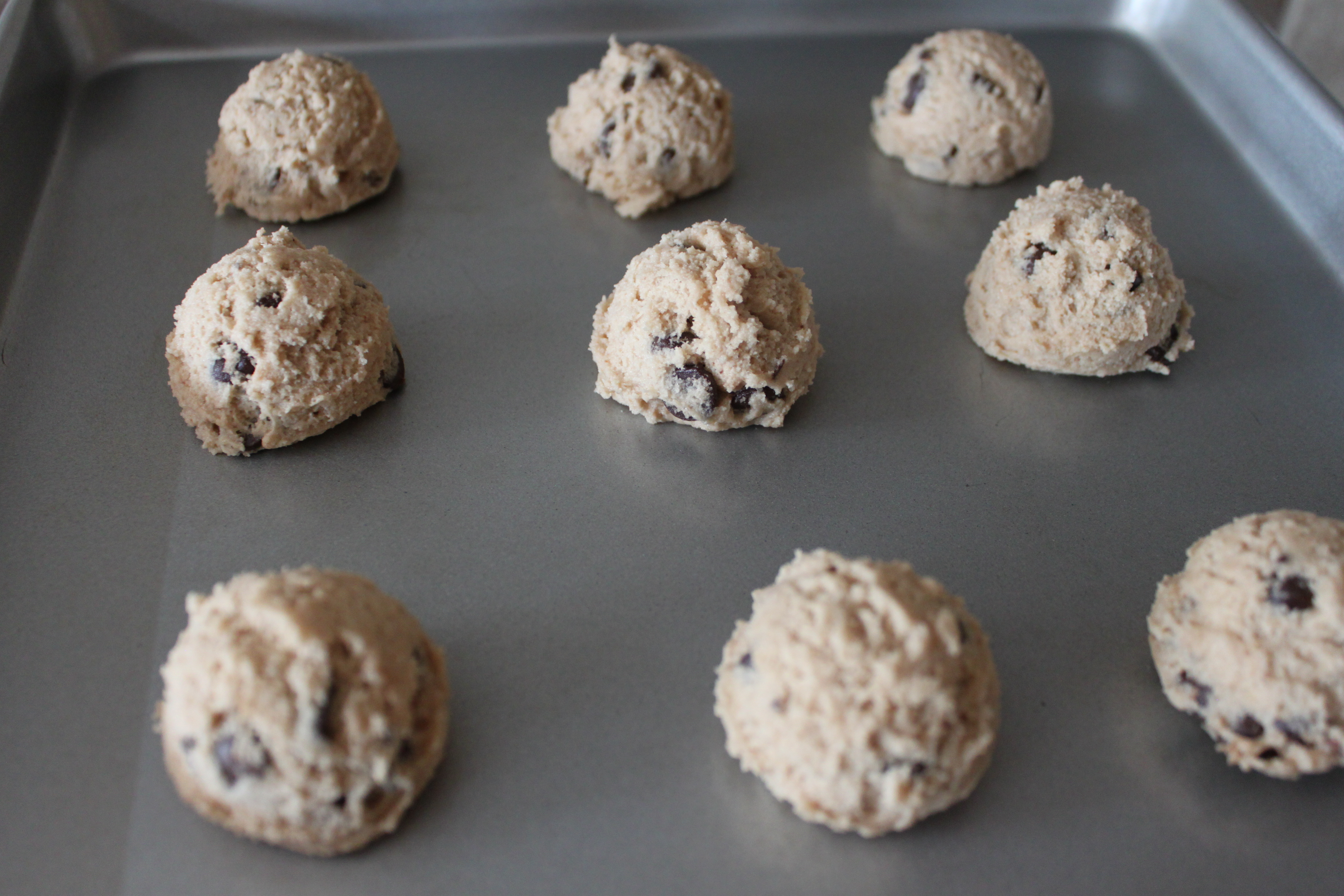
  • 1/2 cup sugarIMG_7911
  • 1/2 cup brown sugar
  • 2/3 cup unsalted butter (or margarine), softened
  • 1 egg
  • 1 tsp vanilla
  • 1 1/2 cups flour
  • 1/2 tsp baking soda
  • 1/4 tsp salt
  • 1 cup semi-sweet chocolate chips

Beat butter, sugars, vanilla, and egg. Stir in dry ingredients. Drop by spoonfuls onto cookie sheep. Bake 10 minutes.

*Total amount of carbohydrate in recipe: 468 grams.  Makes 26 cookies.  Carbs per cookie: 18.

IMG_7915

 My Splenda Reduced-Sugar Chocolate Chip Cookie Recipe

Preheat oven to 375 degrees Farenheit (or 350 convection).

Ingredients:

  • 1/4 cup sugar
  • 1/4 cup Splenda
  • 2 tbsp Splenda Brown Sugar Blend (contains real brown sugar)
  • 2/3 cup unsalted butter (or margarine), softened
  • 1 egg
  • 1 tsp vanilla
  • 1 1/2 cups flour
  • 1/2 tsp baking soda
  • 1/4 tsp salt
  • 1/2 cup chocolate chips

Beat butter, sugar, Splenda, vanilla, and egg. Stir in dry ingredients. Drop by spoonfuls onto cookie sheep. Flatten slightly with the back of a spoon. Bake 10 minutes.

*Total amount of carbohydrate in recipe: 255.  Makes 22 cookies.  Carbs per cookie: 11.

IMG_7920

* All of my recipes include carbohydrate amounts. My daughter manages her Type 1 Diabetes with an insulin pump and carb counting. I hope this is helpful to you if you count carbs too.

Michelle

The Health Benefits of Tea

My goal of reducing sugar, especially in the beverages I drink, will only happen if I make some big changes. I’m cutting back on the pop and fruit juices and that means increasing my water consumption to make up for it. I’m okay with that but I do like a little flavour in my water. Enter the tea leaf.

I recently became enamoured of the Canadian company, David’s Tea. Which is perfect, seeing as I need to adopt a new favourite beverage. Hot or cold, tea is flavourful, doesn’t need sugar, and can also provide added health benefits. When we think of tea, we usually think of black tea. But there is actually a whole world of tea, each type with specific characteristics and health benefits. From green to oolong, to herbal and rooibos, drinking a variety of teas regularly has a double bonus. Reducing sugar wards off illness and boosts the immune system plus the different varieties of tea also have immunity and disease fighting properties.

Common Types of Tea

  • Black tea is the most well-known tea and it contains the highest amount of caffeine. The tea leaves are fermented for longer than other teas, giving it a darker colour.
  • White tea is the least processed and purest tea. These tea leaves are very delicate. White tea should be steeped at a lower temperature than other teas. White teas can be a little more expensive than others.
  • Green tea is unfermented. The leaves are dried. It is believed to be the most widely consumed tea in the world and it is believed to have many health benefits.
  • Oolong tea is a traditional Chinese tea and is characterized by leaves that are rolled or twisted into a bit of a unique shape. It is flavourful and sweet.

Not technically teas, but often considered as such:

  • Rooibos – Rooibos is an herbal infusion from South Africa. It is often flavoured and is a good choice for iced tea.
  • Herbal – Herbal teas are infusions of herbs, flowers, and fruits. They too make wonderful iced teas.

Rooibos and herbal tea blends can sometimes have added nuts. If you have nut allergies in your family, as we do, stay away from nutty tea!

Health Benefits of Tea

So, what are the health benefits? Black, white, green, and oolong teas all contain antioxidants called flavonoids. Flavonoids are believed to fight the free radicals that cause cancer, heart disease, and clogged arteries. The more processed the tea leaves (as in oolong and black tea) the lower their antioxidant levels, but they are still believed to be effective. They all also contain theanine and caffeine which improve mental alertness. Tea has less caffeine than coffee which may make it a healthier alternative.

  • Green tea has the highest antioxidant levels which, according to WedMD.com, is believed to interfere with the growth of many cancers, prevent clogging of the arteries, reduce the risk of neurological disorders such as Alzheimer’s and Parkinson’s diseases, reduce the risk of stroke, burn fat, and improve cholesterol levels.
  • Black tea, again according to WebMD.com, may protect the lungs from cigarette smoke damage and it may reduce the risk of stroke.
  • White tea may just have the strongest anti-cancer properties seeing as it is the least processed of the teas.

It would make sense that loose tea is the preferred choice over bagged, instant, or ready-made teas. Loose tea is less processed and when properly packaged and not exposed to air will retain its flavour, oils, flavonoids, and freshness. Loose tea also diffuses and steeps more effectively. Look for all-natural teas that don’t include added artificial flavours or sugars.

Most importantly, for me anyway, is not to add sugar. There are other, healthier sweeteners. I’ll talk about those in a future post. But really, tea can be enjoyed just on its own. Plus, there are many blends available to try. A loose tea blend provides the best of each variety in one cup! I certainly have accumulated a large selection in my cupboard.
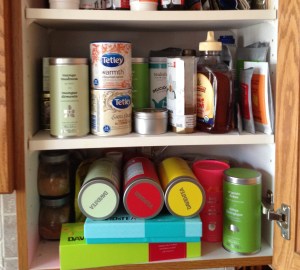
IMG_0696

All this talk about tea is making me feel like a cup! It’s time to put the kettle on. What is your favourite tea?

Michelle


Better Drinking

Goal #1? Drink better!

I’m concerned about the amount of sugar that I consume and I’m pretty certain that a lot of it is in the things I drink. So I did a quick internet search to find out how many teaspoons of sugar we are consuming in the common things that I and my family drink regularly. I knew it would be high, but I was a little shocked at some of these. I made every attempt to find accurate sugar information on these drinks, but please keep in mind that this information is from various online sources.

  • My favourite coffee: a grande Starbucks Caramel Macchiato – 6.5 tsps of sugar!
  • My husband prefers a grande Latte at Starbucks – 3.5 tsps.
  • I also enjoy a Tim Horton’s French Vanilla Cappuccino every now and then. The small size – 6 tsps.
  • The small frozen lemonade at Tim’s – 5 tsps.
  • Smoothies should be better, right? A Tim Horton’s medium strawberry banana smoothie with yogurt – 10 tsps.
  • A McDonald’s medium strawberry banana smoothie with yogurt –  12 tsps.
  • A Mcd’s medium chocolate shake – 22 tsps of sugar!
  • What about a can of pepsi or coke? – depending on the info source, 8 – 10 tsps.
  • 12 ounces of apple juice, a staple in every kids’ diet – 10 tsps.
  • 1 cup of chocolate milk – 6 tsps.
  • I enjoy vitamin water. That’s healthy, right? 1 bottle of vitamin water – 6.5 tsps.
  • And, my son’s recent favourite pop? A 20 oz bottle of Mountain Dew – 15 tsps of sugar. I had no idea!

images

Just in case these shocking numbers alone are not enough to make me want to change my drinking habits, here are some real reasons to do so:

  • Sugar contains no essential nutrients.
  • Sugar is bad for our teeth.
  • Too much sugar can cause insulin resistance which can lead to Type II Diabetes.
  • Sugar might lead to obesity.
  • Sugar might lead to diseases such as cancer, heart disease, and stroke.
  • Sugar might lower immunity.
  • Sugar might cause inflammation in the body.
  • Sugar might cause skin aging, or skin problems such as acne.

Take a look at these articles:

How Toxic is Sugar? CBC News
What Does Cancer Eat? Sugar Mostly…  National Post
 7 Surprising Reasons to Give Up Sugar  ABC News

Okay, I’ll stop now! I am going to do a little more reading about sugar and I’ll share my findings in future blog posts. But for now, here is what I plan to do:

  1. I will gradually reduce the amount of sugar I put in my morning coffee until I can get away with only a bit, or maybe even none.
  2. I will drink more tea throughout the day, both hot and cold. This is a great excuse to experiment with homemade iced tea!
  3. I’ll drink more water and to make it appetizing I will infuse fruit in my water. I recently saw a very cool water bottle with a built in infuser compartment. Will have to go shopping!
  4. I will make fruit smoothies at home with no sugar.

Let’s talk about sugar. What are your thoughts?

Michelle